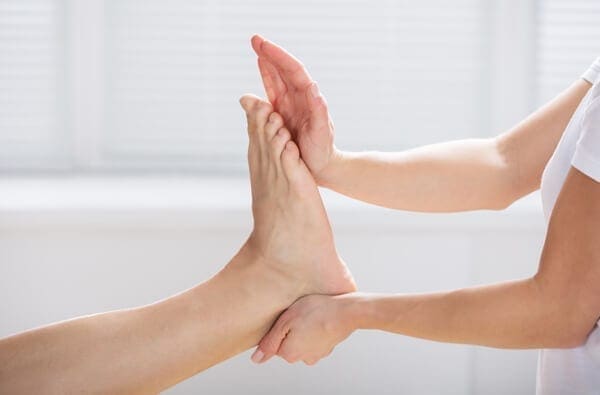

Heel pain in children is something parents often notice after sport, running or a busy day of activity. Your child might complain that their heel hurts after soccer training, start limping after a game of netball, or say their feet are sore on the walk home from school. Sometimes there’s no complaint at all, just a child who quietly stops wanting to do the things they normally love.
For growing children, one of the most common causes of heel pain is Calcaneal Apophysitis, also known as Sever’s disease. Despite the name, it isn’t really a disease. It’s an irritation of the growth plate at the back of the heel that can develop while a child’s bones are still growing. With winter sports and school activities in full swing, children may be running, jumping and training regularly throughout the week, which can make heel pain more noticeable.
Children and teenagers have growth plates because their bones are still developing. These areas are made of cartilage and are still developing, which means they can be more vulnerable to repetitive stress. One of those growth plates sits at the back of the heel, right where the Achilles tendon attaches.
Every time a child runs, jumps or pushes off the ground, the calf muscles and Achilles tendon pull on that spot. During a growth spurt, or when activity levels suddenly increase, repeated pulling can irritate the growth plate and cause pain. Calcaneal Apophysitis is most common in active children between around 8 and 14, and it can affect one or both heels.
Symptoms of Sever’s Disease (Calcaneal Apophysitis) vary from child to child, but the pattern is usually recognisable. The pain sits at the back or underside of the heel and tends to show up during or after physical activity. It often eases with rest, then returns as soon as your child is active again. The heel may also be tender when pressure is applied around the sides or back of the heel, and some children mention stiffness or discomfort when they first get moving in the morning.
Because younger children can’t always explain where or how much something hurts, behaviour is often the biggest clue. A limp after sport, walking on tiptoes, hanging back at training, or losing interest in activities they’d normally jump at are all worth paying attention to.
Calcaneal Apophysitis (Sever’s disease) usually comes from a combination of factors rather than one single cause. Growth is a big part of the picture. During a growth spurt, bones can grow faster than the surrounding muscles and tendons adapt, which may increase tension around the heel. Activity matters too. Running, jumping and repeated impact all place demands on growing feet, and symptoms often appear when a child starts a new sport, ramps up training, returns after a break, or simply has a very full schedule between club sport and the playground.
Calf and Achilles tightness can contribute to the stress going through the heel, and foot posture, movement patterns and footwear can influence how forces are spread through the feet and legs. None of these things automatically causes Sever’s disease on their own, which is why a proper assessment looks at the whole child rather than just the sore heel.
No, and this matters. While Calcaneal Apophysitis is a common cause of heel pain in growing children, heel pain can also relate to an injury, repetitive strain, Achilles tendon problems, stress injuries or other conditions affecting the foot and lower limb. That’s why persistent heel pain shouldn’t be brushed off as growing pains. Growth plays a role, but pain that changes how your child walks, runs or plays deserves a proper look rather than a wait and see approach.
It’s worth arranging an assessment if your child’s heel pain is ongoing, keeps returning, is getting worse, or is affecting their walking, sport or everyday activities. If the pain follows a significant injury, is accompanied by marked swelling or bruising, or occurs at rest or at night, your child should be assessed to determine the cause. These signs don’t necessarily mean something serious is going on, but they do mean the cause should be properly identified.
Treatment focuses on settling the irritation and addressing the factors contributing to it, and the right mix depends on your child’s assessment.
Activity modification usually comes first. That means finding a level of sport and play that lets the heel calm down. A child doing PE, lunchtime running, training and weekend games is carrying a substantial load, and trimming it in the right places can make a real difference.
If they have calf tightness or lower limb weakness, stretching and strengthening programmes may be recommended, matched to your child’s age and stage rather than a generic routine from the internet. Footwear is reviewed too, since school shoes, everyday sneakers and sports boots all influence how much stress reaches the heel.
Some children also benefit from cushioning or support under the heel. At AC Podiatry, Solemaids insoles may be recommended for suitable children with heel pain related to Calcaneal Apophysitis (Sever’s disease). They’re designed to help reduce pressure and tension around the heel and can be used in different types of footwear, and whether they’re appropriate is decided as part of your child’s assessment.
There’s no fixed timeline that applies to every child. Symptoms often improve with the right management, but they can flare again when activity increases or during further growth, because the growth plate remains until the heel finishes developing. Calcaneal Apophysitis does generally resolve once growth is complete, but children shouldn’t be left to put up with pain in the meantime. If symptoms keep returning, an assessment can identify what’s driving them and how to reduce their impact.
Children’s podiatry is a core part of what we do at AC Podiatry. When assessing heel pain in children, we look beyond the sore heel and consider how your child’s feet and legs function as they move. This may include assessing foot posture, walking and movement patterns, activity levels and footwear to understand what could be contributing to their symptoms.
From there, we can develop a treatment plan suited to your child, which may include activity advice, exercises, footwear guidance and heel support. For children who are suitable candidates, Solemaids may also be recommended as part of their treatment plan.
If your child has been complaining of heel pain after sport, at school or during everyday walking, a podiatry assessment can help identify the possible cause and determine the most appropriate way to manage it. To arrange an appointment, you can call (08) 8255 5575 or book online at a time that suits you.
Not necessarily. Complete rest used to be the standard advice, and while reducing activity does help settle symptoms, stopping everything isn’t always needed or practical.
The amount of activity your child can comfortably manage will depend on their symptoms and individual assessment. If a particular activity consistently causes significant pain or leaves them noticeably worse afterwards, that activity may need to be scaled back for a while. For some children, temporarily reducing running and jumping is enough. Others can keep playing with adjustments to their training load, footwear and heel support. The aim is to keep your child as active as possible without repeatedly aggravating the heel.
No referral is needed. You can call us on (08) 8255 5575 or book online at any of our four Adelaide clinics: Adelaide CBD, Magill, Malvern, Oakden.
This information is general in nature and should not replace professional medical advice. Always consult a qualified healthcare provider for assessment and treatment recommendations specific to your child’s situation.