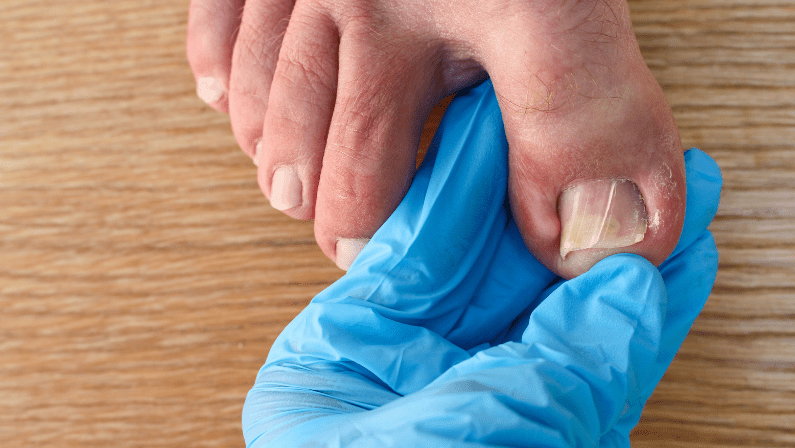
A wart usually starts as a small, hard spot on the sole of your foot or the side of a toe. It sometimes starts with a few tiny black dots in the middle, sometimes stinging a bit when you press on it or stand on it for a while. On the sole of the foot, this is also commonly called a verruca.
It’s a common problem, and there are several wart treatment options available, from Swift microwave therapy through to cryotherapy and salicylic acid. Here’s how they compare, and what actually determines which one is right for you.
What Determines Which Wart Treatment Suits You?
There’s no single best treatment for every wart. A small, recently developed wart on a toe behaves very differently from a large, well-established one on a weight-bearing part of the heel, and the right approach reflects that.
Your podiatrist will generally consider the size and depth of the wart, how long it’s been present, its location on the foot, how many warts are involved, and your age and general health.
Immune function plays a role too, since warts are caused by HPV, and how your body responds to the virus affects how it heals. None of this means one option is “better” in general terms, only that it’s better for your specific wart.
Comparing Your Wart Treatment Options
Swift Microwave Therapy
Swift is a newer treatment that uses targeted microwave energy to trigger an immune response against the wart, without cutting or freezing the skin. Sessions are quick, typically just a few minutes, and most people find the discomfort brief and manageable rather than significant.
It’s usually done as a short course of sessions spaced a few weeks apart, and there’s no downtime afterwards, which is part of why it has become a popular option for people who don’t want to interrupt sport or daily activity.
Cryotherapy
Cryotherapy freezes the wart tissue, causing it to blister and eventually shed. It’s a well-established option and tends to work well for smaller, more superficial warts, though it can take several sessions for more established ones.
Some tenderness after treatment is normal, and larger or deeper warts may need a few rounds before they clear.
Salicylic Acid and Chemical Treatments
Salicylic acid gradually breaks down the thickened skin of the wart over repeated applications. It is often used at home between clinic visits and sometimes alongside professional debridement to remove the built-up hard skin.
It suits milder or smaller warts well, and consistency matters more than speed here, since it works gradually rather than in one session.
Surgical and Other In-Clinic Options
For warts that haven’t responded to the above, or that are large or particularly stubborn, your podiatrist may discuss debridement, silver nitrate application, or surgical removal.
These are usually considered later in the process rather than as a first step, once a professional has assessed how the wart is responding to more conservative approaches.
Why Do Warts Come Back After Treatment?
It’s a fair question, and worth understanding properly rather than assuming treatment simply didn’t work. Warts are caused by HPV, a virus that lives in the skin, and treatment works by damaging the wart tissue enough that your immune system can clear the rest.
Sometimes a small amount of infected tissue remains below the visible surface, particularly with larger or older warts, and that’s what allows a wart to reappear in the same spot. It can also show up as a new wart nearby if the virus has spread slightly under the skin. This is a known part of how HPV-related lesions behave, not a sign that the wrong treatment was chosen or that something went wrong.
If a wart does return, it’s worth going back to an experienced podiatrist rather than starting over on your own, since they can assess whether the same approach should continue or whether it’s time to change the treatment.
What Are the Black Dots In a Wart?
If you’ve looked closely at a wart and noticed small black dots, that’s one of the more reliable ways to tell it apart from a corn or callus. Those dots are tiny, clotted blood vessels that have grown into the wart tissue, not dirt or debris.
They’re a normal feature of plantar warts and don’t indicate anything about severity or how easily the wart will respond to treatment.
When Should You See A Podiatrist For A Wart?
Warts are appropriate to monitor for a while, since some resolve on their own given time. It’s worth booking an assessment
- If the wart is painful, especially when walking, if it’s spreading or multiplying
- If it hasn’t responded to over-the-counter treatments after a reasonable trial
- If you’re not entirely sure it’s a wart rather than a corn or something else
- If you have diabetes, poor circulation or a compromised immune system, since these can affect both healing and the risk of complications.
How We Treat Warts At AC Podiatry
At AC Podiatry, we assess the wart along with factors like your activity levels, general health and any previous treatment before recommending an approach. The treatment options include Swift microwave therapy, cryotherapy, salicylic acid, or a combination over a few visits, depending on how your wart responds.
We’ll also talk you through what to expect at each stage, so you know why a particular option has been chosen rather than just what’s being done. You can read more about how plantar warts develop and progress if you’re still working out whether what you’re looking at is a wart.
Get Your Wart Properly Assessed
If you’re dealing with a wart and aren’t sure which treatment is the right fit, we can assess it properly and recommend an approach rather than leave you guessing.
Our team is here to help across our Adelaide clinics in Oakden, Adelaide CBD, Magill, Malvern. You can call us on (08) 8255 5575 or book online.
Frequently Asked Questions
What’s the difference between Swift and cryotherapy for wart treatment?
Swift uses microwave energy to trigger an immune response against the wart, with no freezing or cutting involved, while cryotherapy physically freezes the wart tissue to make it blister and shed. Both are effective, and which suits you depends on the wart itself and your podiatrist’s assessment.
How many treatment sessions will I need?
It varies with the size, depth and age of the wart. Some smaller warts respond within one or two sessions, while larger or longer-standing ones may need a course of several, spaced a few weeks apart.
Is Swift microwave therapy painful?
Most people describe a brief, sharp sensation during treatment rather than ongoing pain, and it settles quickly once the session ends. There’s no cutting or freezing involved, and no recovery time needed afterwards.
Can a wart come back after treatment?
Yes, occasionally, since treatment works by prompting your immune system to clear the remaining virus, and a small amount can sometimes persist below the surface. This isn’t a sign of treatment failure, and your podiatrist can advise on next steps if it happens.
Do I need a referral, and where can I book?
No referral is needed. You can call us on (08) 8255 5575 or book online at any of our four Adelaide clinics.