
The lower limb works as a connected system, and the way one area moves affects the others. When a joint is stiff, a muscle is weak, or the foot does not function efficiently, the body compensates, and that often shows up as pain somewhere else along the chain. Pain felt at the knee, for example, can originate in the way the foot loads during movement.
A foot that rolls inward too far can rotate the lower leg and change how the knee tracks with every stride. Because these patterns repeat with every step, even small inefficiencies can accumulate into significant strain over time. Understanding your biomechanics may help identify factors contributing to current problems and future injury risk.
A biomechanical assessment can help if you have recurring foot, ankle, knee, hip, or lower back pain, if injuries keep returning despite rest, or if you notice uneven wear on your shoes. It is also useful if you are recovering from an injury, returning to activity, increasing your training load, or experiencing pain that does not have an obvious cause. People who spend long periods on their feet and active individuals who want to reduce their injury risk often benefit.
AC Podiatry provides biomechanical assessments across our Adelaide clinics for patients experiencing recurring pain, injury or movement concerns.
Posture Checking
A biomechanical assessment is a structured process that looks at your body from several angles. It typically includes the following components.
We begin by observing your standing posture and overall alignment, including how you hold your feet, knees, hips, and pelvis. This helps identify structural patterns, such as flat feet or high arches, that can influence how you move and load your joints.
Joint And Muscle Testing
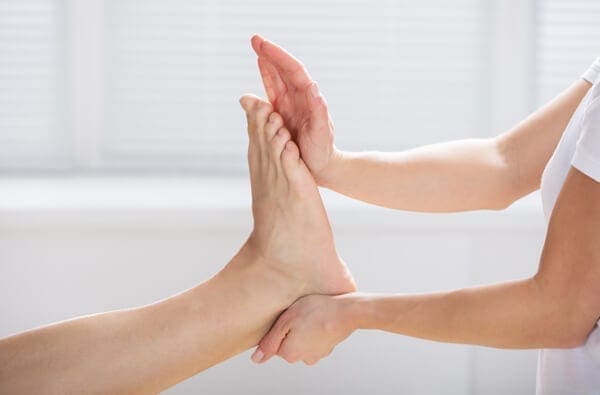
We assess the range, quality, and direction of movement in the relevant joints, along with the strength and flexibility of the surrounding muscles. Examining each joint without your body weight through it allows us to measure its true range and identify any restriction, weakness, or instability.
Foot And Lower Limb Evaluation
We examine the function of the foot and lower limb in detail, including foot posture, the position of joint axes, and the relationships between segments. Along with the biomechanical examination we also consider how the foot interacts with the structures above it.
Gait Analysis and Movement Assessment
We then assess how everything functions while you move. A gait analysis of your walking and your running shows how your lower limb works under load. The whole process is comfortable and non-invasive, and bringing the shoes you wear most often provides useful information.
Conditions We Assess
Many sporting and overuse conditions have a biomechanical component, and an assessment helps identify the factors involved. These commonly include tibialis posterior dysfunction, which is often associated with flat feet, weak calf and gluteal muscles, and limited ankle movement, along with heel pain and plantar fasciitis, shin splints and stress injuries, and pain at the knee or hip related to lower limb function. Structural concerns such as bunions, forefoot pain, and recurring corns or calluses, which can reflect uneven pressure through the foot, are assessed as well.
Benefits Of Early Assessment
Identifying biomechanical issues early, before they develop into established or chronic problems, often makes them far simpler to manage. A lower limb assessment gives you a clearer understanding of your condition, identifies the contributing factors, and allows for treatment that is tailored to you.
It could also support injury prevention, more efficient movement, and better informed footwear choices. Improving your biomechanics can help with performance not only for elite athletes but for any active person who wants to move and perform better.
Treatment Recommendations
Our expert podiatrists bring a thorough understanding of biomechanical function to every assessment, and use the findings to develop a treatment plan matched to your needs. Whether it is a strengthening program, a course of mobilisation/manual therapy, Orthotics, shockwave or a referral to an appropriate health professional, you can trust us with your foot health.
Depending on your individual treatment plan, extracorporeal shockwave therapy typically involves three treatment sessions provided once weekly over three weeks. In more complex cases, additional sessions using our extracorporeal shock wave device may be recommended.
Most patients experience pain reduction following extracorporeal shockwave therapy, though the treated area may remain tender initially. Some localised swelling or bruising is normal. Extracorporeal shockwave therapy facilitates natural healing, with maximum benefits typically seen 10-12 weeks after the first session.
Note: This information is for educational purposes. An individual assessment is required to determine the most appropriate management strategies for your situation. Please consult a registered health professional for advice specific to you.