Your child’s been limping a bit. When you check their feet there’s a small, rough bump on the sole, maybe with tiny black dots in the middle. It doesn’t look quite like a blister or a callus, and when you press on it, they wince.
Chances are, it’s a plantar wart. And if you’re a parent dealing with this for the first time, you’ve probably got questions. How did they get it? Is it contagious? Will it go away on its own? And most importantly, how do you get rid of it without putting your child through something painful or traumatic? Here’s everything you need to know about warts on kids’ feet, from what causes them to which treatments actually work.
What Are Plantar Warts?
Plantar warts (also called verrucas) are small growths caused by the human papillomavirus (HPV). They’re called “plantar” because they appear on the plantar surface, the sole of the foot. The virus enters through tiny cuts or breaks in the skin, often so small you’d never notice them.
In children, plantar warts are incredibly common. Kids’ immune systems are still developing, they often go barefoot in places where the virus thrives (like pools and changerooms), and they’re more likely to have small cuts or scrapes on their feet from running around.
Symptoms Of Plantar Warts Look Like?
Plantar wart symptoms can vary, but here’s what to look for:
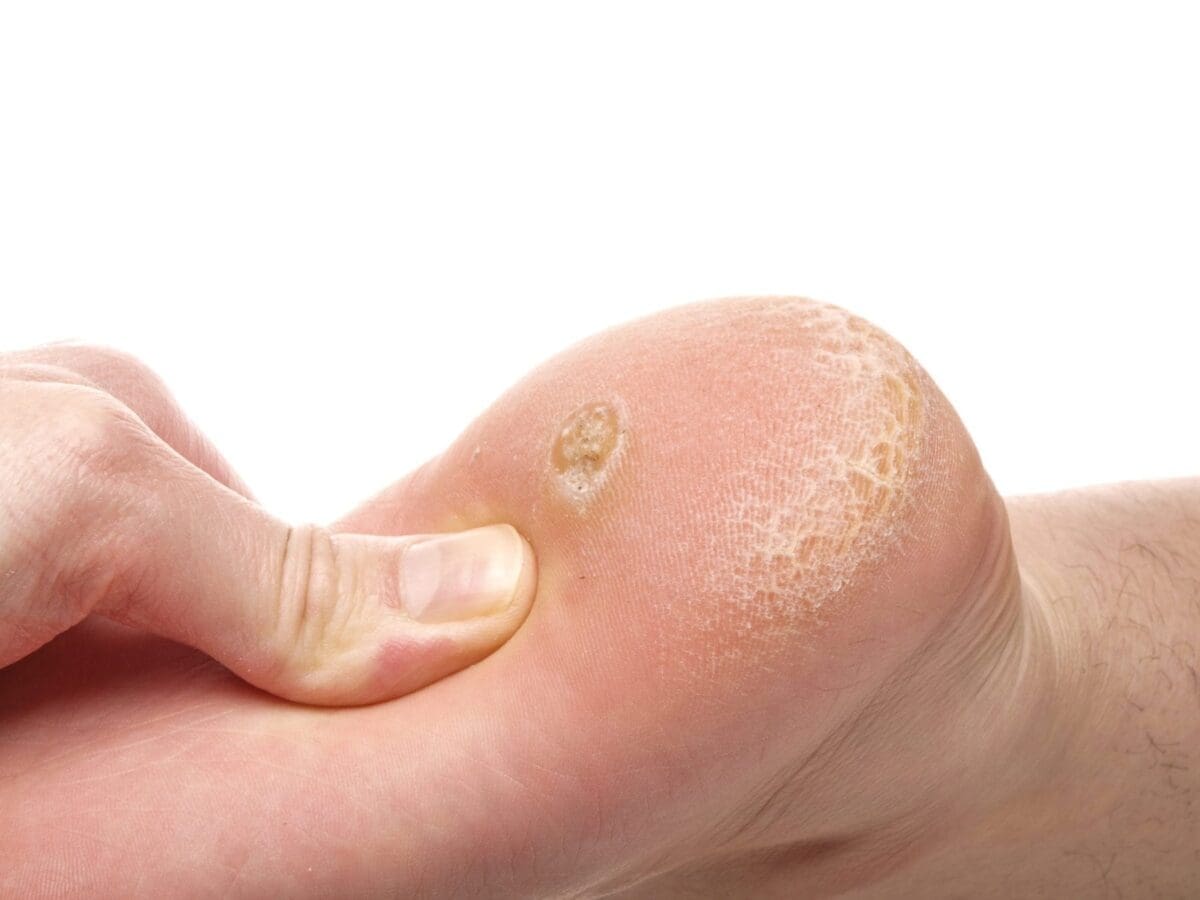
- A small, rough, grainy bump on the sole of the foot
- Hard, thickened skin over a well-defined spot
- Tiny black dots in the centre (these are small blood vessels, not “seeds”)
- Pain when walking or standing, especially if the wart is on a weight-bearing area
- The wart might be flat rather than raised because of the pressure from walking
One thing that confuses parents is telling the difference between a plantar wart and a corn. Corns are areas of thickened skin caused by pressure and friction, usually on bony areas or between toes. Warts, on the other hand, are caused by a virus and often have those telltale black dots. If you’re not sure what you’re looking at, it’s worth having a podiatrist take a look.
Common Questions Parents Ask About Plantar Warts
Once you realise your child has a plantar wart, it’s normal to have a few questions, especially around how they got it, whether it can spread, and what to do day-to-day.
How Did My Child Get a Wart?
The HPV virus that causes warts thrives in warm, moist environments. Common places kids pick up the virus include:
- Swimming pools and pool decks
- Public showers and changerooms
- Gym floors and sports facilities
- Shared bathmats or towels
- Walking barefoot in communal areas
The virus is contagious, but not highly so. Not every child who walks barefoot at the pool will get a wart. It depends on whether they have a small break in the skin where the virus can enter, and how their immune system responds to it.
Are Warts Contagious?
Yes, warts are contagious, but the risk of spreading them isn’t as high as you might think. The virus spreads through direct contact with the wart or contact with surfaces that have been touched by the wart (like towels or floors).
Here’s what you need to know – your child can spread the wart to other parts of their own body if they pick at it or scratch it. They can potentially spread it to other family members through shared towels or bathmats. The virus can survive on surfaces, which is why public pools and changerooms are common sources
But don’t panic. Simple hygiene measures like not sharing towels, wearing thongs in public showers, and keeping the wart covered go a long way in preventing spread.
Can Children Take A Bath with A Plantar Wart?
This is a question parents ask a lot, and the answer is yes, your child can take a bath with a plantar wart. The virus is already present in their system, so bathing won’t make the wart worse or cause new warts to appear elsewhere on their body. However, you should:
- Dry the wart area last to avoid spreading the virus to other parts of the body
- Use a separate towel for the affected foot if possible
- Avoid sharing bath time with siblings if you’re concerned about transmission (though the risk is relatively low)
Will the Wart Go Away on Its Own?
Sometimes, yes. Children’s immune systems can often clear the virus on their own, and many warts will disappear without treatment within 1-2 years. But here’s the thing: that’s a long time for a child to deal with discomfort. If the wart is painful, affecting how they walk or run, or causing them embarrassment (especially if it’s visible or if they’ve had comments from other kids), waiting it out might not be the best option.
Also, the longer a wart is left untreated, the more it can spread. One wart can turn into several warts, making treatment more complicated down the track.
Treatment Options for Warts on Kids’ Feet
When it comes to treating plantar warts in children, you’ve got several options. The right choice depends on the wart’s size and location, how long it’s been there, and your child’s age and pain tolerance.
Over-the-Counter Treatments
These are usually the first things parents try, and they can work for small, new warts.
Salicylic Acid: This is the active ingredient in most wart removal products. It works by gradually dissolving the layers of the wart. You apply it daily, often for several weeks or months.
Pros: Inexpensive, easy to do at home, painless
Cons: Takes a long time (often 8-12 weeks), requires daily application, doesn’t always work, can irritate surrounding skin
For kids foot wart home treatment, this is the safest option to try first. But if you’ve been applying it consistently for 6-8 weeks and there’s no improvement, it’s time to see a podiatrist.
Cryotherapy (Freezing)
This involves freezing the wart with liquid nitrogen. It’s a common treatment, and you might remember having it done yourself as a kid.
How it works: The freezing destroys the wart tissue. The wart usually blisters and falls off after a week or two. Multiple treatments are often needed.
Pros: Relatively quick, widely available
Cons: Can be painful (especially for young children), often requires several sessions, can cause blistering and discomfort
For younger kids or children who are anxious about medical procedures, the pain associated with freezing can be a significant drawback.
Swift Wart Treatment
Swift wart therapy is an option that may be considered, particularly for stubborn warts in children. It uses microwave energy to heat the wart tissue, which triggers an immune response. Your child’s immune system then recognises and attacks the virus causing the wart.
How it works: A podiatrist applies the Swift device to the wart for a few seconds. It creates a brief, sharp sensation (like a small zap), but it’s over quickly. Most children handle it well, especially when they know it only lasts a few seconds.
Pros:
- Usually, it only requires 3-4 treatments spaced a few weeks apart
- No blistering, no wound to care for afterward
- Works by activating the immune system, so it can clear multiple warts even if only one is treated
- Swift wart treatment is suitable for children as young as 4-5 years old
Cons:
- Brief discomfort during treatment (though most kids manage this well)
- Not covered by all health funds (check with your provider)
Surgical Removal
In rare cases where warts are large, painful, and haven’t responded to other treatments, surgical removal might be considered. This involves cutting out the wart under local anaesthetic.
Pros: Immediate removal
Cons: Requires anaesthetic, can be painful during recovery, risk of scarring, wart can still recur if the virus isn’t fully cleared.
This is generally a last resort, especially for children.
What’s the Best Treatment for Children’s Foot Warts?
There’s no one-size-fits-all answer, but here’s a general approach:
For small, recent warts: Start with over-the-counter salicylic acid treatment for 6-8 weeks. If there’s improvement, continue. If not, move to professional treatment.
For larger or multiple warts: See a paediatric podiatrist. Swift wart treatment is often the most effective option with the least discomfort.
For warts causing significant pain or affecting how your child walks: Don’t wait, see a podiatrist. The longer a painful wart is left, the more it can affect their gait and potentially cause other issues.
When To See A Podiatrist?
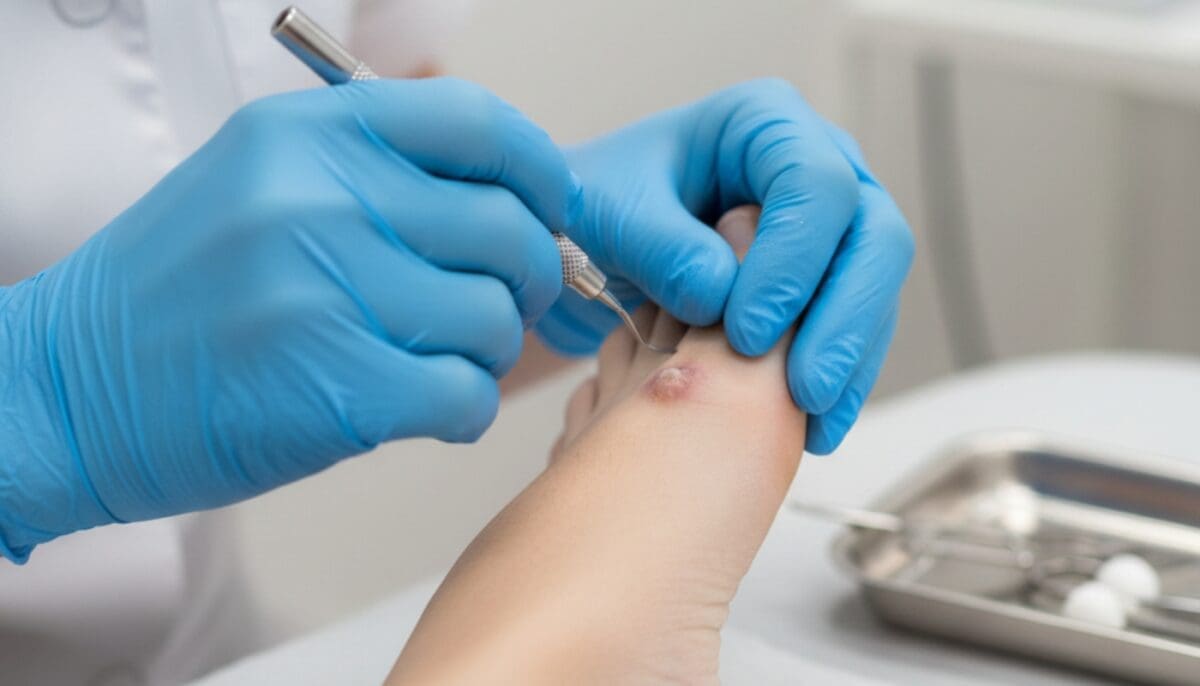
It’s a good idea to see a podiatrist if the wart is painful, affecting how your child walks, or doesn’t improve after 6–8 weeks of home treatment. You should also get it checked if you’re unsure whether it’s a wart, if it’s spreading, or if there are multiple warts.
If your child has a weakened immune system, diabetes, or if the wart is bleeding or showing signs of infection, it’s best not to wait and have it assessed early.
Finding The Right Treatment In Adelaide
Warts on kids’ feet are common and most children will experience at least one at some point. It’s not a sign of poor hygiene, and it doesn’t mean you’ve done anything wrong as a parent. With appropriate care, warts can be managed, helping your child stay comfortable and active.
If you’re based in Adelaide and your child has a plantar wart that isn’t improving, is spreading, or is causing discomfort, you may consider seeing a podiatrist for assessment.
At AC Podiatry, a range of treatment options for children’s foot warts are available, including Swift therapy, depending on individual needs and clinical assessment.
To arrange an appointment, you can call (08) 8255 5575 or book online. Clinics are located in Oakden, Adelaide CBD, Magill, and Malvern.
Disclaimer: This information is general in nature and should not replace personalised medical advice. Please consult with a registered podiatrist for individual assessment and treatment recommendations.